
Why drying decides the price of your paddy
In Nellore, paddy is often harvested at 20–25% moisture, but mills and warehouses want it at around 14%. The gap between those two numbers is where farmers lose money: moisture deductions at the weighbridge, yellowing and fungus after a wet spell, and distress sales when there is no place to dry.
Sun drying on roads and threshing floors still does most of the work in our district. It is free, but it depends on the weather, needs a lot of labour and space, and dries unevenly. When an unseasonal rain arrives during harvest, a heap of wet paddy can start heating and discolouring within a day or two.
Mechanical dryers solve this. But not all dryers are the same. This guide explains the three main types (batch, recirculating and single-pass continuous-flow) so that farmers, FPOs, traders and rice millers can choose the right one.
Paddy drying basics every buyer and seller should know
Whatever dryer you use, the same grain science applies. These rules of thumb are what separate good drying from paddy that breaks in the mill.
- Target moisture: about 14% for sale and short-term storage; 12–13% if the paddy will be stored for several months.
- Dry within 24 hours of harvest when moisture is above about 20%. Wet paddy kept in heaps or bags heats up, yellows and loses head-rice yield.
- Dry gently, not fast. Removing too much moisture at once, or heating the grain too much, creates hairline cracks (fissures). Cracked grain looks fine as paddy but turns into broken rice in the mill.
- Rest the grain (tempering). Letting paddy rest between drying stages allows moisture inside the kernel to move to the surface. This greatly reduces cracking.
- Watch grain temperature, not just air temperature. As a general guide, keep grain temperature below about 40–45°C for milling paddy, and lower for seed paddy.
- Measure, don’t guess. A calibrated moisture meter at intake and outlet is the most important tool in any drying operation.
These figures are general industry guidelines. Exact settings depend on the dryer model and paddy variety (for example BPT 5204 / Sona Masoori or MTU varieties). See also our guide to popular paddy varieties in Nellore.
1. Batch dryers (flat-bed and in-bin)
A batch dryer holds a fixed load of paddy in one place while heated air is blown through it. When the whole load reaches the target moisture, it is unloaded and the next batch is filled. The most common version is the flat-bed dryer: a raised perforated floor with a fan and a burner (often fired with rice husk) underneath. In-bin dryers work on the same principle inside a storage bin.
How it works: load the paddy 30–50 cm deep, blow warm air through for several hours, mix or turn the layer midway, and unload when dry.
Strengths
- Lowest investment and simplest to build, run and repair locally
- Can run on rice husk, so fuel costs are low
- Good fit for a village, a farmer group or an FPO
Limitations
- Uneven drying: the bottom layer dries faster than the top, so moisture varies within the batch unless it is turned
- Low throughput, typically a few tonnes per batch
- Labour-intensive loading, turning and unloading
Best for: small farmers, FPOs and village-level drying where volumes are modest and budgets are tight.
2. Recirculating batch dryers
A recirculating dryer is also filled one batch at a time, but the paddy does not sit still. An elevator lifts the grain to the top, it flows down through a heated drying section, and then passes into a resting (tempering) section before being lifted again. The paddy circulates many times until it reaches the set moisture, and the dryer stops automatically.
How it works: fill the dryer; the grain circulates through the drying zone, the tempering zone and the elevator, again and again; the dryer auto-stops at the target moisture and discharges.
Strengths
- Best grain quality: short heating followed by rest keeps cracking low and head-rice yield high
- Very uniform final moisture across the whole batch
- Largely automatic, with a built-in moisture sensor on most models
- Handles very wet paddy well
Limitations
- Throughput is limited by batch size (commonly 5–30 tonnes per batch)
- A full drying cycle can take 8–12 hours or more for wet paddy
- Higher cost per tonne of capacity than flat-bed dryers
Best for: rice mills and seed processors where milling quality and uniformity matter more than sheer volume.
3. Single-pass (continuous-flow) dryers
In a single-pass dryer, wet paddy enters at the top and moves steadily down a tall drying column while hot air passes through it. Dried paddy comes out at the bottom continuously; there are no batches to fill and empty. Mixed-flow and cross-flow columns are the common designs.
How it works: pre-clean the paddy, hold it in a surge bin, feed it continuously into the dryer column, heat it with air from a husk-fired furnace through a heat exchanger, cool it, and send the dry paddy to a tempering or storage bin.
Strengths
- Highest throughput: runs around the clock during peak harvest
- Lowest labour and handling per tonne
- Easy to link with pre-cleaners, elevators, storage bins and weighbridges
- Lowest operating cost per tonne at large volumes
Limitations and how good plants manage them
- Removing a lot of moisture in one pass can crack the grain. Well-run plants limit the drop per pass and send the paddy to tempering bins before a final pass or storage.
- Needs a steady supply of paddy to run efficiently; this suits a procurement business that collects from many farmers.
- Higher upfront investment and needs trained operators.
Best for: aggregators, procurement companies, large mills and warehouses that handle thousands of tonnes in a short harvest window.
Side-by-side comparison
Batch dryers are cheapest, recirculating dryers give the best quality, and single-pass dryers handle the most volume.
| Factor | Batch (flat-bed / in-bin) | Recirculating batch | Single-pass (continuous) |
|---|---|---|---|
| Grain movement | Stationary | Circulates through dryer and tempering zone | Flows once through the column |
| Typical scale | A few tonnes per batch | 5–30 tonnes per batch | Several tonnes per hour, continuous |
| Moisture uniformity | Low–medium (needs turning) | High | Medium–high (with tempering bins) |
| Crack / broken-rice risk | Medium | Low | Low–medium, depends on moisture drop per pass |
| Labour needed | High | Low | Lowest per tonne |
| Investment | Low | Medium–high | High |
| Cost per tonne dried | Medium | Medium | Lowest at large volumes |
| Best suited to | Farmers, FPOs, villages | Rice mills, seed units | Procurement hubs, large mills, warehouses |
Capacity and cost ranges are indicative and vary by manufacturer and model.
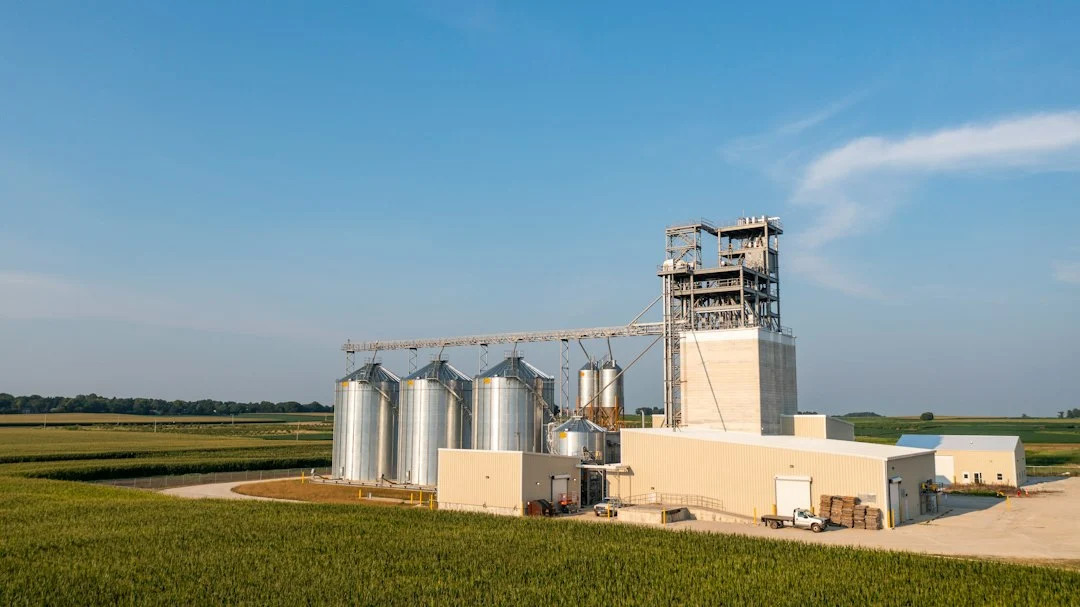
Manuma Siddhi’s planned 5,000 MT single-pass dryer
Manuma Siddhi is planning to set up a single-pass paddy dryer with the capacity to dry 5,000 MT of paddy per season in the Nellore region. We chose single-pass because our work is procurement at scale: we collect paddy from many farmers during a short harvest window, and a continuous dryer is the most efficient way to handle that volume.
What 5,000 MT per season means in practice (rough planning figures)
- Over a 45–60 day harvest window, that is roughly 85–110 MT of wet paddy a day, or about 4–6 tonnes an hour running 20 hours a day.
- Drying from about 22% to 14% moisture removes roughly 9% of the paddy’s weight as water, around 450 MT of water over a 5,000 MT season.
- Rice husk from milling can fuel the furnace, keeping fuel costs low and using a by-product that is already available locally.
How this helps farmers and buyers
- Sell right after harvest. Farmers do not need to wait for sunny days or find road space to dry paddy.
- Protection from unseasonal rain. Wet paddy can be dried quickly instead of spoiling in heaps.
- Fewer losses, better quality. Controlled drying and tempering reduce yellowing and cracking, so more whole grain reaches the mill.
- Reliable supply for mills. Rice mills receive paddy at consistent moisture, ready for storage or milling.
- Local jobs in operations, handling and logistics.
The dryer will work alongside our existing paddy procurement, warehousing and logistics services, so paddy can move from field to dryer to storage to mill with one team. Farmers can learn more on our For Farmers page. Location, launch date and drying charges will be announced once the plan is finalised.
How to choose the right dryer
Start with your volume per season, then decide how much grain quality and automation you need.
- Estimate your seasonal volume and the number of harvest days. Divide to get tonnes per day; this decides the dryer size.
- Check your paddy supply pattern. Steady daily arrivals suit single-pass; irregular arrivals suit batch or recirculating dryers.
- Decide your quality priority. For seed paddy or premium milling, favour gentle recirculating drying.
- Plan the fuel source. Rice husk is the cheapest fuel in our region; use an indirect heat exchanger so smoke does not touch the grain.
- Plan the whole line, not just the dryer: pre-cleaner, elevators, surge and tempering bins, moisture meters and dust control.
- Budget for trained operators and after-sales service from the manufacturer.
Frequently asked questions
What moisture should paddy be dried to?
About 14% for sale and short-term storage, and 12–13% for longer storage.
Which dryer is best for a small farmer or FPO?
A flat-bed batch dryer, usually fired with rice husk, is the most affordable and easiest to maintain.
Does machine drying cause broken rice?
Only when drying is too fast or too hot. Gentle drying with tempering keeps breakage low, often lower than uneven sun drying.
What is the difference between single-pass and recirculating dryers?
In a single-pass dryer, paddy flows through once, continuously. In a recirculating dryer, one batch cycles through the drying and resting zones many times until it is dry.
Will Manuma Siddhi dry paddy for farmers?
Our planned single-pass dryer is designed to support paddy procurement from farmers in the Nellore region. Contact us for updates on timelines and services.
Need help choosing a paddy dryer?
Every operation is different: your volume, paddy variety, fuel and budget all change the right answer. Our team can help you compare dryer types and capacities for your farm, FPO, mill or warehouse.
For dryer recommendations, please contact us: send an enquiry, call +91 91333 88866 or email hello@manumasiddhi.com.